
Market Insights
Our Outlook on the Saudi Real Estate & Logistics Market
We do not view the real estate market as a collection of numbers or isolated transactions, but as an integrated economic system where demographics, urbanisation, consumption patterns, and supply chains all intersect.
Our Market Reading Methodology
We understand the market from the inside — not from surface statistics
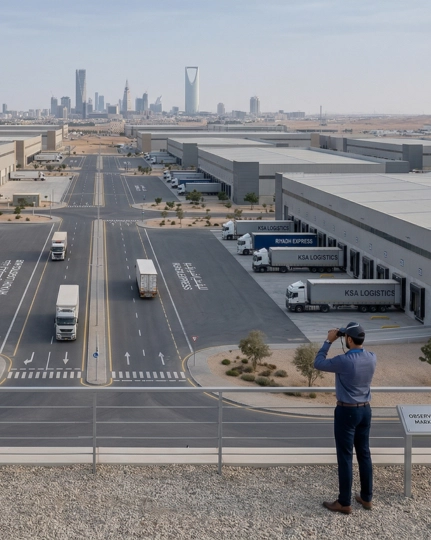
Our market analysis does not begin from published data — it begins from the field. We monitor warehouse movements, operational activity, and the pulse of real demand in industrial districts, and we compare that with what the published numbers reflect.
We believe the industrial real estate market in the Kingdom is undergoing deep structural transformation — driven by population growth, Vision 2030, the Regional Headquarters Programme, and the evolution of supply chains. This transformation creates opportunities for those who read it early, and risks for those who read it too late.
- Population growth and its impact on urban logistics demand
- The Regional Headquarters Programme and its effect on Riyadh
- The evolution of Jeddah's ports and their impact on supply chains
- Industrial expansion in the Eastern Province
- Seasonal demand and temporary housing opportunities near the Holy Cities
- The rise of e-commerce and rapid last-mile delivery requirements
Market Pulse
Saudi Industrial Real Estate Market Landscape
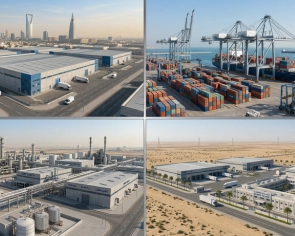
Saudi Arabia’s industrial and logistics real estate market is in a phase of accelerating growth, driven by deep structural shifts in urbanisation, economic policy, and the evolution of regional and international supply chains.
Last-Mile Logistics
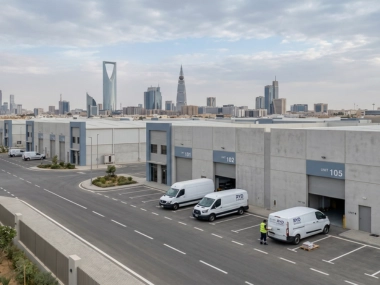
E-commerce growth is creating sharp demand for small and medium warehouses within urban areas, close to the end consumer.
Regional Headquarters
The Regional Headquarters attraction programme is generating demand for storage and distribution facilities linked to international companies entering the region.
Maritime Supply Chains
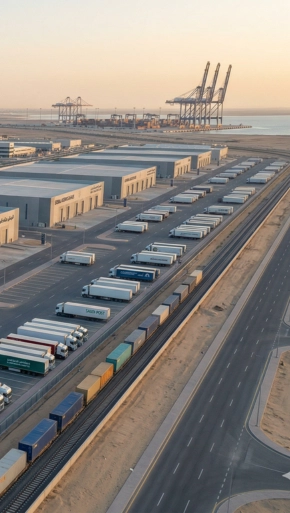
Expansions at Jeddah and Dammam ports are boosting demand for logistics warehouses tied to maritime cargo flows and international trade.
Local Manufacturing
Vision 2030 targets for increasing manufacturing's contribution are driving demand for industrial land and facilities in special economic zones.
Specialist Labour Housing
Growth in large industrial projects is raising demand for workforce accommodation close to operational sites as a strategic supply chain component.
Renewable Energy
Large-scale energy projects are opening new logistics markets in areas previously considered peripheral, creating unprecedented early-investment opportunities.
City-by-City Analysis
Our reading of four key markets
Vision 2030 The primary driver of industrial demand growth
— Direction of demand for logistics storage
— Vacancy rates in prime locations
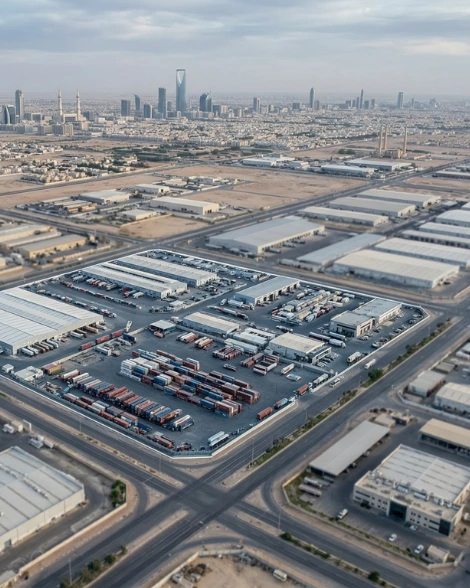
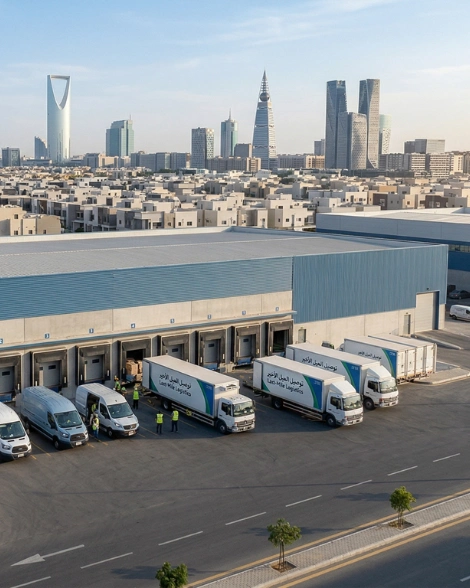
Each market has its own logic, and the ability to read that difference precisely is what separates the right decision from the costly one. In Riyadh, population growth driven by the Regional Headquarters Programme is accelerating demand for advanced logistics solutions within the urban perimeter — a clear shift toward smart city logistics built on speed, precision, and proximity to the end consumer.
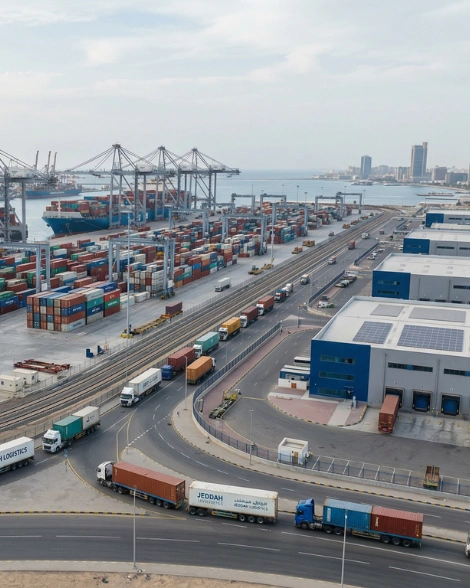
In Jeddah, sustained investment in infrastructure and real estate reinforces its position as the Kingdom’s primary commercial gateway on the Red Sea. The presence of Jeddah Islamic Port continues to drive demand for logistics warehouses connected to cargo movement, domestic distribution, and regional re-export.
The Eastern Province, led by Dammam, Khobar, and Jubail, presents long-term logistics opportunities through the integration of industrial production, energy, and urban expansion. In Makkah and Madinah, Hajj and Umrah create seasonal demand patterns that reward adaptable logistics models — where facilities must efficiently transition between peak periods and the intervals in between.
Riyadh
Accelerating Population Growth + Regional HQs
Primary Driver: Urban Expansion
Demand Pattern: Smart City Logistics
Assets in Demand: Urban Warehouses
Demand Horizon: Short + Medium Term
Opportunity Level: Very High ↑
Analysis
Population growth driven by the Regional Headquarters Programme has created increasing demand for advanced logistics solutions within Riyadh’s urban perimeter. We read this shift as a transition from conventional logistics to smart city logistics — where speed, precision, and proximity to the end consumer are the governing criteria.
Riyadh is transforming into a city of regional corporate headquarters, which means rising demand for urban distribution warehouses and multi-tier logistics centres.
Assets in Demand
- Urban distribution centres close to residential concentrations
- Last-mile warehouses serving e-commerce operations
- Cold storage and processing facilities for food products
- Multi-tier warehouses to maximise space efficiency
- Labour housing near new industrial zones
Jeddah
Gateway to Trade & Supply Chains
Primary Driver: Strategic Position
Demand Pattern: Port Logistics
Assets in Demand:Port Warehouses
Demand Horizon: Medium + Long Term
Opportunity Level: High ↑
Analysis
Substantial investment in Jeddah’s infrastructure and real estate has reinforced its role as the leading economic and commercial hub on the Red Sea coast. We connect Jeddah’s urban growth with its pivotal role in international supply chains.
Jeddah Islamic Port represents the Kingdom’s international trade gateway, creating rising demand for logistics warehouses tied to cargo movements — whether for domestic distribution or regional re-export.
Assets in Demand
- Warehouses in close proximity to Jeddah Islamic Port
- Flexible storage for international cargo
- Distribution solutions supporting international trade and re-export
- Specialist logistics facilities for temperature-sensitive goods
- Warehouses with direct maritime access
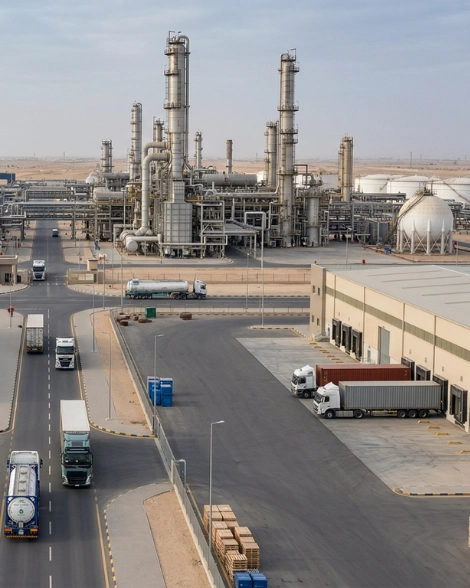
Eastern Province
Industrial Growth + Balanced Urban Expansion
Primary Driver: Industrial Base
Demand Pattern: Industrial-Logistics Integration
Assets in Demand:Multi-Use Facilities
Demand Horizon: Long Term
Opportunity Level: Strategic ↑↑
Analysis
Balanced growth between industrial activity and urban expansion in Dammam, Khobar, and Jubail is creating high-value, long-term logistics opportunities. We view the Eastern Province as a model for integration between logistics real estate and industrial production.
The energy and petrochemicals sector provides a stable demand base, while new industrial projects under Vision 2030 open additional opportunities for those entering the market with the right strategic reading.
Assets in Demand
- Multi-use warehouses serving industrial and commercial sectors
- Industrial distribution centres adjacent to factories
- Specialist storage for hazardous materials and petrochemicals
- Industrial labour housing near industrial complexes
- Solutions supporting urban growth in Dammam and Khobar
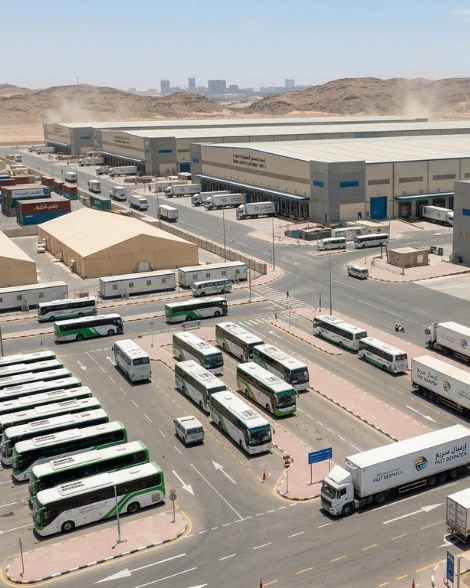
Makkah & Madinah
High-Intensity Seasonal Logistics
Primary Driver: Industrial Base
Demand Pattern: Industrial-Logistics Integration
Assets in Demand: Multi-Use Facilities
Demand Horizon: Long Term
Opportunity Level: Strategic ↑↑
Analysis
Balanced growth between industrial activity and urban expansion in Dammam, Khobar, and Jubail is creating high-value, long-term logistics opportunities. We view the Eastern Province as a model for integration between logistics real estate and industrial production.
The energy and petrochemicals sector provides a stable demand base, while new industrial projects under Vision 2030 open additional opportunities for those entering the market with the right strategic reading.
Assets in Demand
- Multi-use warehouses serving industrial and commercial sectors
- Industrial distribution centres adjacent to factories
- Specialist storage for hazardous materials and petrochemicals
- Industrial labour housing near industrial complexes
- Solutions supporting urban growth in Dammam and Khobar
Synthesis & Outlook
The Saudi market creates opportunities for those who read it deeply
Saudi Arabia is living through a rare logistics transformation: accelerating population growth, a shift towards local manufacturing, international attraction programmes, and a large-scale infrastructure upgrade — all simultaneously.
This intersection creates short-term opportunity windows of high value. Those who enter them with sound analysis and precise timing achieve a competitive advantage that is difficult to recover later. Those who enter with incomplete information pay a heavy price.
At Al-Hodaithi Real Estate, we place this analysis in service of our clients — not as reports for reference, but as inputs for practical decisions and real execution.
- Identifying the right market for your activity based on each city's dynamics
- Timing market entry based on real demand indicators, not advertised ones
- Selecting the asset type that best matches your requirements and budget
- Evaluating the risks associated with each option before any contractual commitment
- Defining an exit strategy from the outset to protect long-term returns
Would you like a bespoke market analysis?
Connect with our team for an in-depth market analysis covering the target market and the type of asset you are seeking or managing.

Company
Location
Get updates
© 2026 | All rights reserved by Alhodaithi
Company
Location
Get updates
© 2025 | All rights reserved by Alhodaithi